Your cart
There are no more items in your cart
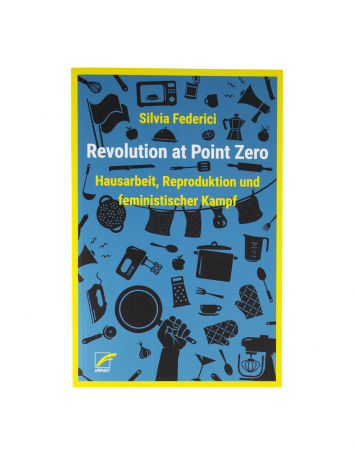
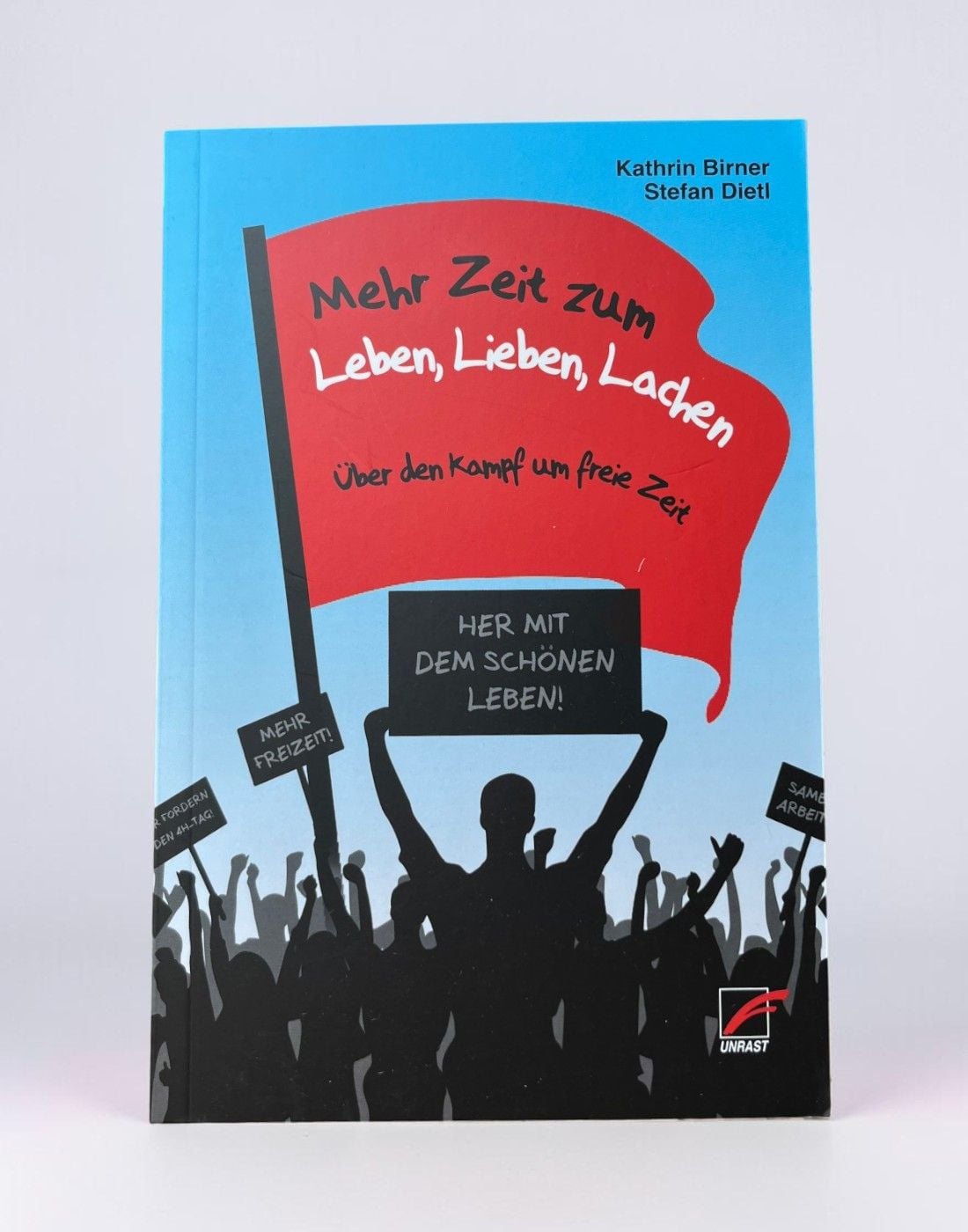
Mehr Zeit zum Leben, Lieben, Lachen
Über den Kampf um freie Zeit
Kompakter Überblick über vergangene Kämpfe und aktuelle Debatten um Arbeitszeitverkürzung
Kathrin Birner, Stefan Dietl
Here you can find the complete selection of books, magazines and calendars in our shop.
The promise of less work and more time for rest and enjoyment has an inherent utopian element: the idea of a life free from toil and drudgery. It is therefore no wonder that it is precisely the struggles for shorter working hours, more leisure time, more holidays, free weekends and the greatest possible freedom to organise one’s own free time that drive the masses onto the streets with particular enthusiasm. Ever since the emergence of the labour movement, the struggle for shorter working hours has been a central focus of industrial action, and in recent years in particular, the fight for free time has made a comeback. This is also about greater self-determination and flexible working time models that benefit wage earners.
This book examines current and past struggles for free time. In doing so, it considers the reduction of working hours from a feminist perspective, as well as the challenges posed by the digitalisation of the world of work. Last but not least, the book explores the question of whether the struggle for free time is capable of shattering the totality of the capitalist system.
You might also like