Your cart
There are no more items in your cart

Horst Schöppner
2nd edition
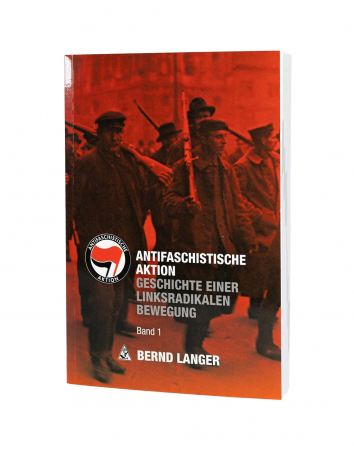
In the 1980s, anti-fascist groups emerged from the autonomous left-wing scene. Well-organised and strategic, they targeted and attacked far-right networks. Across West Germany, local Antifa groups developed a nationwide network that coordinated actions, informed the public, and put anti-fascism on the political agenda. At the same time, the phenomenon known as “militant direct action” began to develop.
“With Antifa Means Attack, a gap in the literature on left-wing movements in the former West Germany has been filled. [...] It paints a vivid picture of the militant movement, covering debates about patriarchy and violence, ideological differences, and the sometimes complicated relationship with the largely unorganised autonomous left. [...] A worthwhile read about a hitherto little-examined part of the history of the anti-fascist movement.” – junge Welt, 12 August 2015
Anti-fascist groups targeted the infrastructure of neo-Nazis, setting fire to printing presses and paramilitary training centres, destroying vehicles and buildings, stealing membership lists, or contaminating meeting places with butyric acid.
“[...] an extremely worthwhile book [...] has the potential to become a standard work on militant anti-fascism in the 1980s [...]” – Antifascist Information, Documentation and Archive Centre Munich (a.i.d.a.), 18 August 2015
For the first time, this book gives a voice to anti-fascists who were active in a clandestine anti-fascist organisation that fought far-right structures militantly and consistently throughout the 1980s. They discuss their motivations, actions, and the underground structure that sought to prevent the mobilisation of neo-Nazis through attacks. In his research, the author draws on previously unknown documents, leaflets, articles, statements claiming responsibility for attacks, and reports from various cities.
You might also like